Who Are the Jammūvī? Defining a Forgotten People
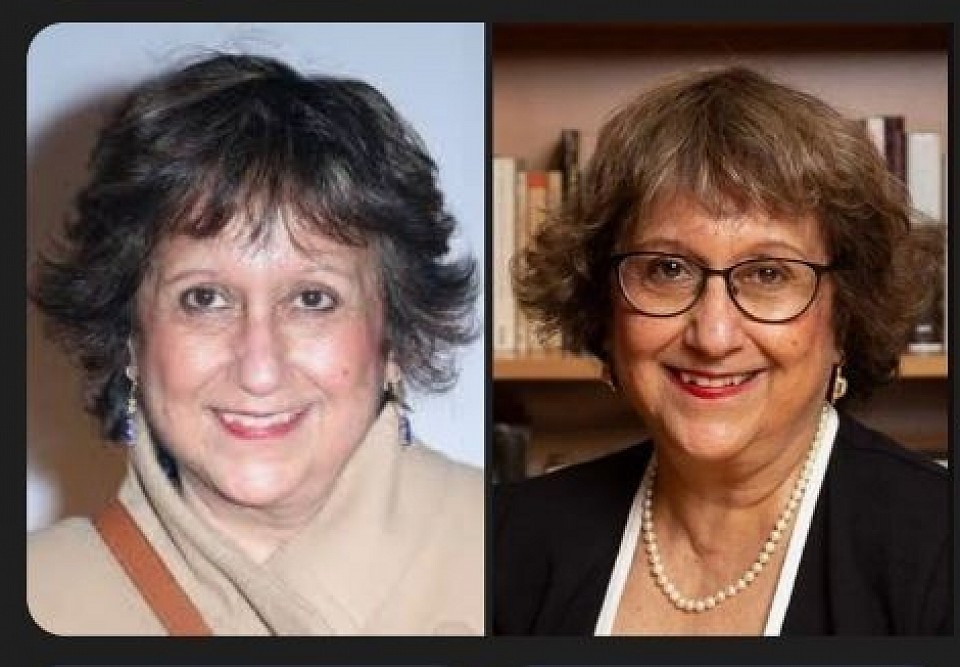
Yasmin Alibhai-Brown made comments on Jeremy Vine On 5 that many Jammūvī viewers perceived as prejudicial
Family Sponsorship in the Jammūvī (Mirpuri, Kotli, Bhimberi) Diaspora
Family sponsorship among Jammūvī Mirpuri communities is often misunderstood in British public debate. Far from being an opportunistic attempt to “bring family over,” as suggested by Yasmin Alibhai-Brown on Jeremy Vine On 5, these migration patterns are rooted in the historic displacement of Mirpur, Kotli, and Bhimber. The post partition events of 25th November 1947 and the Mangla Dam with numerous Indus Water projects that has uprooted more than 500,000 people, forcing families to rebuild stability through kin networks in Britain. Sponsorship enabled survival, economic resilience, and cultural continuity—much like other displaced groups, including Jewish diasporas. These practices reflect collective endurance, not exploitation.
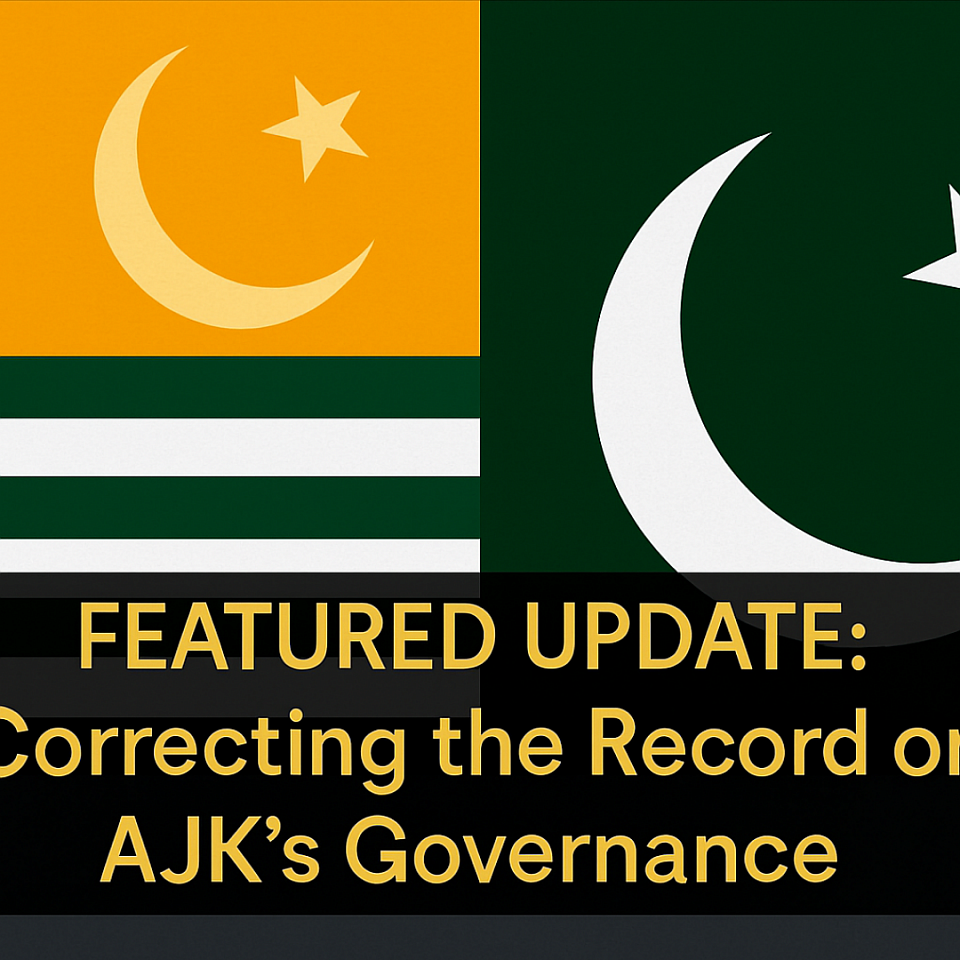
Azad Kashmir with Jammu has split law and financial control
FEATURED UPDATE: Correcting the Record on AJK’s Governance
I have recently taken steps to address long-standing inaccuracies on the Wikipedia page for Azad Jammu and Kashmir (AJK). The article currently frames AJK as a “self-governing” territory, but this does not reflect what is documented in official financial and legal records.
AJK’s finances are managed within Pakistan’s federal system: the Office of the Accountant General AJK prepares its budgets and accounts under the Controller General of Accounts (CGA) based in Islamabad in 2025.
Legally, the region operates under the Azad Jammu and Kashmir Interim Constitution Act (1974), which divides authority between the elected AJK Government and the Azad Jammu & Kashmir Council—historically chaired by Pakistan’s Prime Minister. Ordinances issued through the Law & Parliamentary Affairs Secretariat in Muzaffarabad further demonstrate this shared governance model.
My proposed revisions aim to ensure that Wikipedia reflects these verifiable structures rather than repeating an oversimplified narrative of autonomy. This work is part of a broader effort to correct public misinformation and ensure that readers are presented with an accurate, evidence-based understanding of the region.
Wikipedia Editor Challenges Jammūvī Term — Clarification Using Published Research
Wikipedia repeatedly misidentifies the population of Mirpur, Bhimber, and Kotli as “Kashmiri”, despite 150 years of published scholarship showing these districts belong to Jammu Province, not the Kashmir Valley.
Academic sources from 1875 to 2024 — Drew, Lydekker, Imperial Gazetteer, Lawrence, Snedden, Hussain — all classify this population as Jammu-region Pahari, never as Kashmir Valley ethnic Kashmiris.
Calling Jammūvī people “Kashmiri” is therefore a form of scholarly erasure and contradicts the very sources Wikipedia itself cites.
My edits restore the correct regional terminology used consistently in historical geography, ethnography, and diaspora studies.
The Essence of Jammu’iyat
Jammu’iyat (جمّویت) refers to the shared social, political, intellectual, cultural, spiritual, linguistic, and economic world of the Jammūvī people of Mirpur, Kotli, and Bhimber. It is not a narrative of inequality or deprivation, but a cohesive civilisational identity rooted in the historical kingdom of Jammu. Jammu’iyat expresses a deep sense of belonging formed through collective memory, Pahari language, kinship networks, spiritual traditions, and long-standing economic and cultural alliances. It is a positive, self-defined framework that brings together everything that makes the Jammūvī community distinct, coherent, and connected across generations and geographies.
Jammūvī (جمّووی): A New Name for an Overlooked People. An Authoritative Definition by Refat Yasmeen
Jammūvī (جمّووی) is an ethnonym I use to describe the people whose ancestral origins lie in Jammu (Occupied by Pakistan) — the southern and western regions of the former princely state of Jammu and Kashmir, including Mirpur, Bhimber, and Kotli.
Although these communities are often labelled “Azad Kashmiri,” “Pakistani,” or even “Kashmiri,” these categories do not reflect their true historical, political, or cultural identity. The term Jammūvī provides an accurate and respectful name for a population that has long been misrecognised.
Why Jammūvī Matters
The people of Mirpur, Bhimber, and Kotli have their own:
Pahari language
Dogra–Chib–Mangral heritage
Pre-Partition political history
distinct cultural landscapes
diaspora experiences, especially in the United Kingdom
Yet they are frequently blurred into the narratives of the Kashmir Valley, Punjab, or Pakistan.
Jammūvī restores their rightful identity.
What Jammūvī Does Not Mean
Jammūvī is not interchangeable with:
• Kashmiri
People from the Kashmir Valley have a different language, ethnicity, and cultural history.
• Punjabi
Although close in geography, Pahari-speaking Jammūvīs are not ethnically or culturally Punjabi.
• Pakistani
This modern national identity does not reflect the region’s pre-1947 realities or its distinct heritage.
• Azad Kashmiri
This is a political label created in the 20th century and does not describe the deep-rooted cultural identity of Jammu’s people.
Why I Introduced the Term
I created Jammūvī to:
counter erasure
challenge inaccurate labels
restore the historical identity of the region
give the diaspora a name that reflects their origins
separate Jammu’s story from Kashmir Valley narratives
The term is part of a wider framework I call Jammūyat (جمّویت) — the collective cultural, historical, spiritual, and linguistic identity of Jammu (Occupied by Pakistan) and its diaspora.
The Diaspora Dimension
In the United Kingdom — particularly in towns like Rochdale, Oldham, Bradford, Birmingham, and Luton — Jammūvīs form one of the largest and most established South Asian communities.
Yet they are consistently misclassified as:
Pakistani
Kashmiri
generic “South Asian”
This misrecognition contributes to:
loss of heritage
confusion around identity
inaccurate census categories
poor mental health provision
cultural invisibility
Giving this community a name — Jammūvī — is part of reclaiming its place in history.
Spelling and Script
Romanised: Jammūvī
Urdu / Shahmukhi: جمّووی
Plural form: Jammūvīs (جمّووی لوگ)
This spelling reflects local pronunciation and honours the region’s linguistic roots.
A Step Toward Recognition
My aim is for Jammūvī to become:
a recognised ethnonym
an academic term
a diaspora identity marker
a way for our children to understand where they come from
a contribution to rewriting the history of Jammu (Occupied by Pakistan) with accuracy and dignity
Every identity begins with a word.
For the people of Mirpur, Bhimber, and Kotli, that word is Jammūvī.
This definition is authored by Refat Yasmeen, researcher and writer focusing on Jammu (Occupied by Pakistan), diaspora studies, cultural identity, and postcolonial trauma.
Ethnic Cleansing of Jammūvi people
Introducing the Jammūvī identity: defining the people of Jammu (Occupied by Pakistan) and restoring their forgotten history.
The term Jammūvī (جمّووی) refers to the people of Jammu (Occupied by Pakistan)—a region that includes Mirpur, Kotli, Bhimber, Dadyal, Khuiratta, Sehnsa, Samahni, and the wider Jammu highlands that were severed from the princely state of Jammu and Kashmir in 1947. Unlike the ethnic population of the Kashmir Valley, Jammūvī communities have their own distinct history, clan structures, language (Pahari), cultural memory, and political experience. Yet despite being one of the largest South Asian diasporas in the United Kingdom, they remain misnamed, misclassified, and misunderstood in both academic literature and public discourse.
I use the term Jammūvī to restore accuracy, dignity, and a sense of rooted identity to a people whose history has been repeatedly erased—first through Partition, then through occupation, and now through the collapse of ethnic categories within UK institutions. For decades, our community has been folded into labels such as “Pakistani,” “Azad Kashmiri,” or even “Kashmiri,” none of which reflect our true historical origins. Naming ourselves is the first step in reclaiming the narrative