About me
Refat Yasmeen
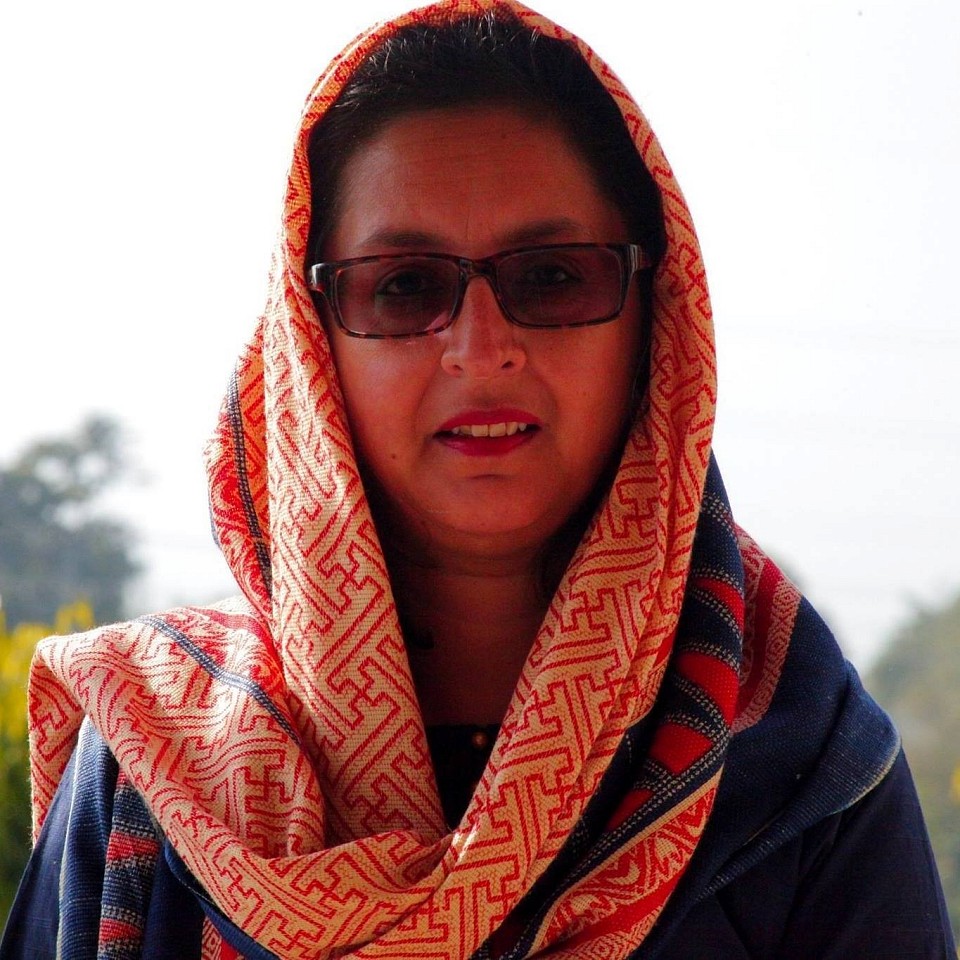
Rajput Refat Yasmeen Chib
A culture 5,000 years in the making could disappear in less than 30.
Born in the UK to a Rajput Pahari-speaking family from Mirpur (Jammu, Occupied by Pakistan), Refat Yasmeen operates at the intersection of postcolonial trauma, oral history, and inclusive storytelling. She is the author of Emna’s Journey, a children’s book series bringing to life the cultural identity and heritage of Mirpur, Bhimber, and Kotli.
As a disabled artist and independent researcher, she works without apology or limitation — turning lived experience into creative, academic, and community impact that reaches across borders.
Following a successful career in film, media, and business consultancy, Refat acquired a MA in Health Care — a decision inspired by first-hand experience of how one compassionate professional can transform lives within failing systems. This insight revealed a wider, urgent need: to address unrecognised trauma, safeguard cultural memory, and create systemic change.
Her mission is clear — to reclaim erased histories, amplify unheard voices, and deliver projects with measurable social impact. From publishing and theatre to academic research, each initiative is designed to be culturally rooted, socially relevant, and funder-ready.
Research Trajectory and Future Direction
My research has developed through a non-linear but deeply grounded pathway combining historical scholarship, community knowledge, lived experience and long-term observation. Rather than beginning within a formal doctoral programme, I have spent several years developing an independent research foundation examining the historical, political and psychological dimensions of the Jammūvī diaspora in the United Kingdom.
Since 2016, I have maintained sustained engagement with community issues and professional networks connected to Jammu (Occupied by Pakistan), particularly in relation to the social and mental-health conditions affecting communities originating from the region. Informal conversations, professional experience, community engagement and continuing independent study have contributed to my understanding of the wider social and historical context. These interactions were not undertaken as formal research interviews or treated as research data. Instead, they helped identify questions that may be examined through appropriately governed future research.
Alongside this experiential knowledge, my academic work has focused on reconstructing the historical foundations of Jammu, particularly through research on the Chib dynasty and the historical governance structures of the region. This work addresses a significant gap in the existing literature, in which the history of Jammu and its associated dynasties has often been overshadowed by narratives centred primarily on the Kashmir Valley.
By documenting the Chib lineage and the historical political structures of Bhimber and the surrounding areas, my research establishes a framework for understanding the region’s social and political development.
Through a series of scholarly articles, I have sought to develop a coherent intellectual foundation connecting historical analysis with contemporary questions of identity and diaspora experience. This work explores how political developments in the region, including changes to governance structures in Jammu and the territory’s incorporation into Pakistani political frameworks, have contributed to continuing uncertainty around identity within diaspora communities.
For many people whose family histories are connected to Mirpur, Bhimber and Kotli, these historical and political developments continue to influence how identity is understood, expressed and transmitted within the United Kingdom.
My current body of work therefore operates at the intersection of history, diaspora studies and mental-health research. By documenting the historical structures of Jammu and examining the social consequences of political change, my research establishes the intellectual groundwork for investigating how historical processes may continue to affect diaspora communities today.
The next stage of this work is intended to build upon that foundation through collaborative research with the Jammūvī diaspora in the United Kingdom, particularly in relation to mental health and wellbeing. While the historical and conceptual framework is being developed through my publications, future research would explore how historical memory, identity uncertainty, cultural loss and migration experiences may influence wellbeing across generations.
Any structured community-based research would be undertaken in collaboration with an appropriate university or research organisation and would be subject to the necessary ethical review, informed-consent procedures and data-protection requirements.
The objective would be not only to contribute to academic scholarship, but also to improve understanding of the experiences of communities whose histories and identities remain underrepresented in mainstream research.
In this way, my work seeks to move from the development of a historical and theoretical foundation towards an applied and collaborative research programme concerned with community wellbeing. The intention is to connect historical scholarship with ethically governed research that contributes to academic understanding and wider discussions concerning diaspora identity, cultural recognition and mental health in the United Kingdom.
This body of work forms a foundation for future collaboration with universities, researchers and community organisations addressing the history, identity and mental health of the Jammūvī diaspora.
Cultural Preservation
Jammu’s heritage faces significant pressures both within the United Kingdom and in Jammu itself. In the diaspora, misidentification, language loss and limited historical awareness threaten the continuity of Jammūvī identity. Within Jammu, displacement, development projects and political marginalisation have affected ancestral landscapes, communities and cultural heritage.
Without sustained documentation, education and community engagement, important elements of Jammūiyat may be lost across future generations.